Copaltite Sealant for Heat Exchangers
Copaltite seals heat exchanger flanges, tube sheet joints, channel covers, and all high-pressure, high-temperature connections against steam, hydrocarbons, acids, refrigerants, and brine. Its -315°F to 1500°F temperature range and chemical resistance make it the standard industrial heat exchanger sealant across oil and gas, power generation, and chemical processing plants throughout the UAE and GCC.
What Is the Heat Exchanger Joint Sealing Challenge?
Heat exchangers transfer thermal energy between two or more process streams, and their sealing joints are exposed simultaneously to high temperatures, significant pressures, and aggressive chemical media on both the shell side and the tube side. Flanges, tube sheet connections, channel cover joints, nozzle connections, and manhole covers must all maintain a leak-free seal through continuous operation and repeated thermal cycling — conditions that cause conventional sealants to harden, wash out, or fail mechanically within months of installation.
Large-diameter heat exchanger flanges present a particular challenge: their size makes it nearly impossible to achieve perfect surface contact across the full joint face, and any surface imperfection — a score mark, a corrosion pit, or slight warpage — provides a path for leakage. The sealant must therefore combine chemical resistance, thermal stability, and gap-filling capability in a single product.
Why Copaltite Is the Standard for Heat Exchanger Sealing
Copaltite's chemical resistance covers every process medium typically encountered in heat exchangers across the oil and gas, petrochemical, power, and chemical industries — steam, ammonia, hydrocarbons, refrigerants, hydraulic fluids, brine, acids, and mild alkalis. Its temperature range of -315°F to 1500°F encompasses the full operating spectrum of shell-and-tube, plate, air-cooled, and special-purpose heat exchangers.
- Seals under steam, hydrocarbons, acids, ammonia, refrigerants, brine, and mild alkalis
- Effective from -315°F to 1500°F across all heat exchanger service conditions
- Elastomeric cure absorbs thermal cycling movement in large-diameter flanges
- Low shrinkage prevents gap formation as joints cycle between hot and cold states
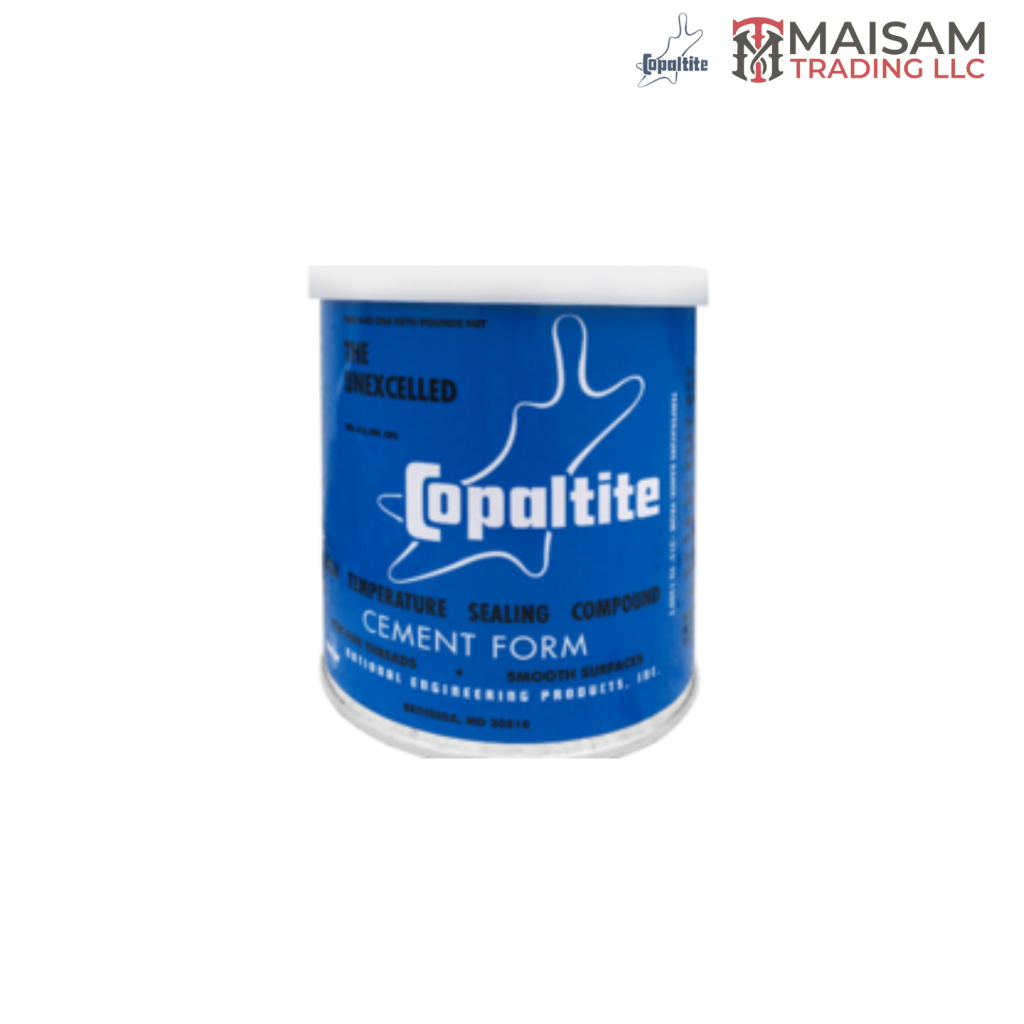
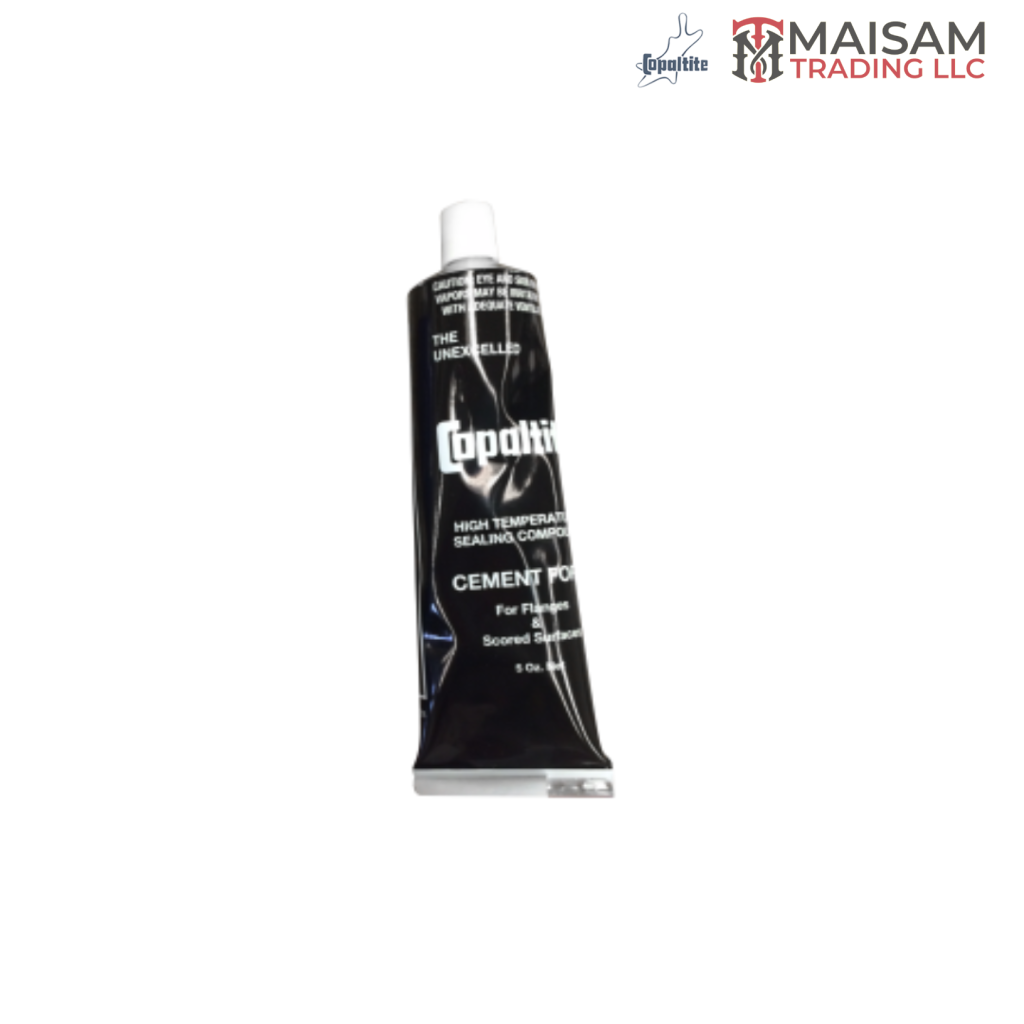
- Copaltite Cement Form fills surface imperfections on large-diameter warped flanges
- Anti-seize properties allow joint separation during planned maintenance turnarounds
- Proven on steam joints at 200 PSI and 1200°F in petrochemical service
Liquid Form vs. Cement Form for Heat Exchangers
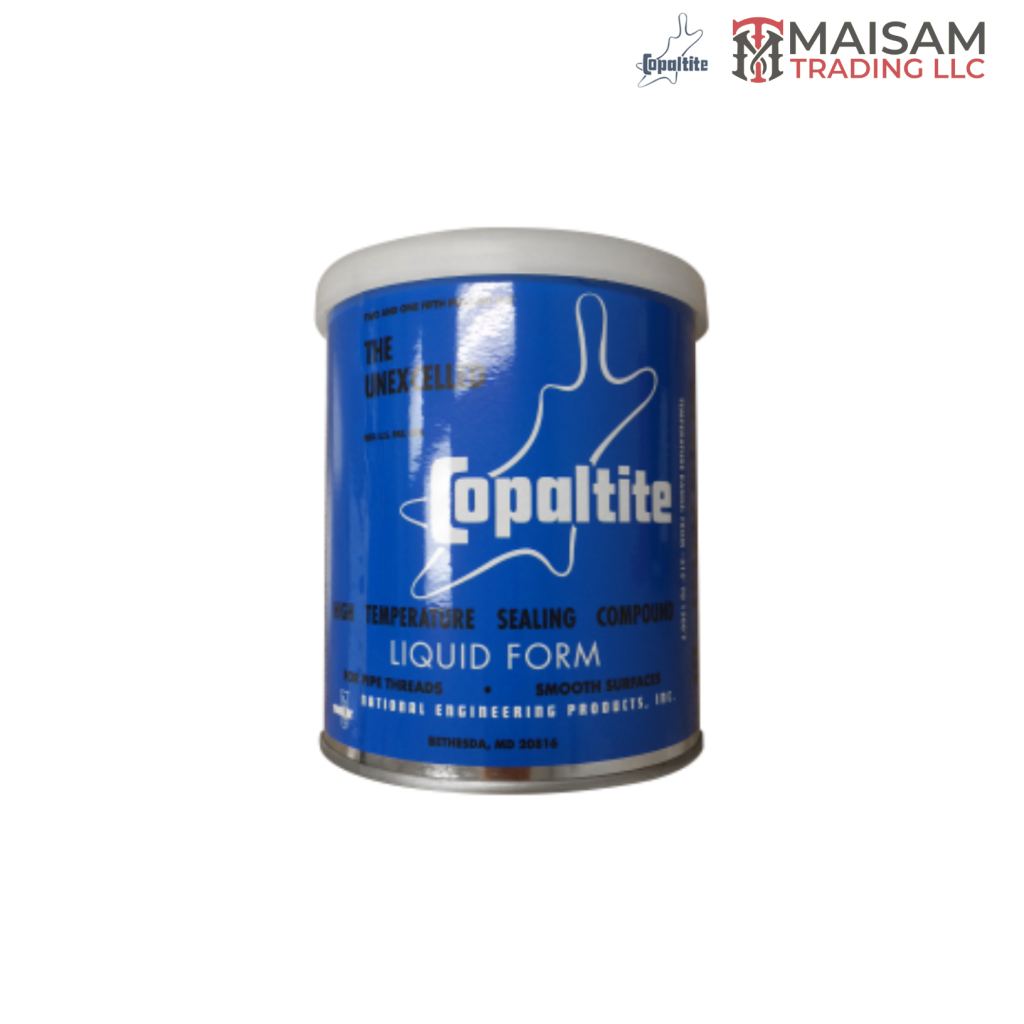
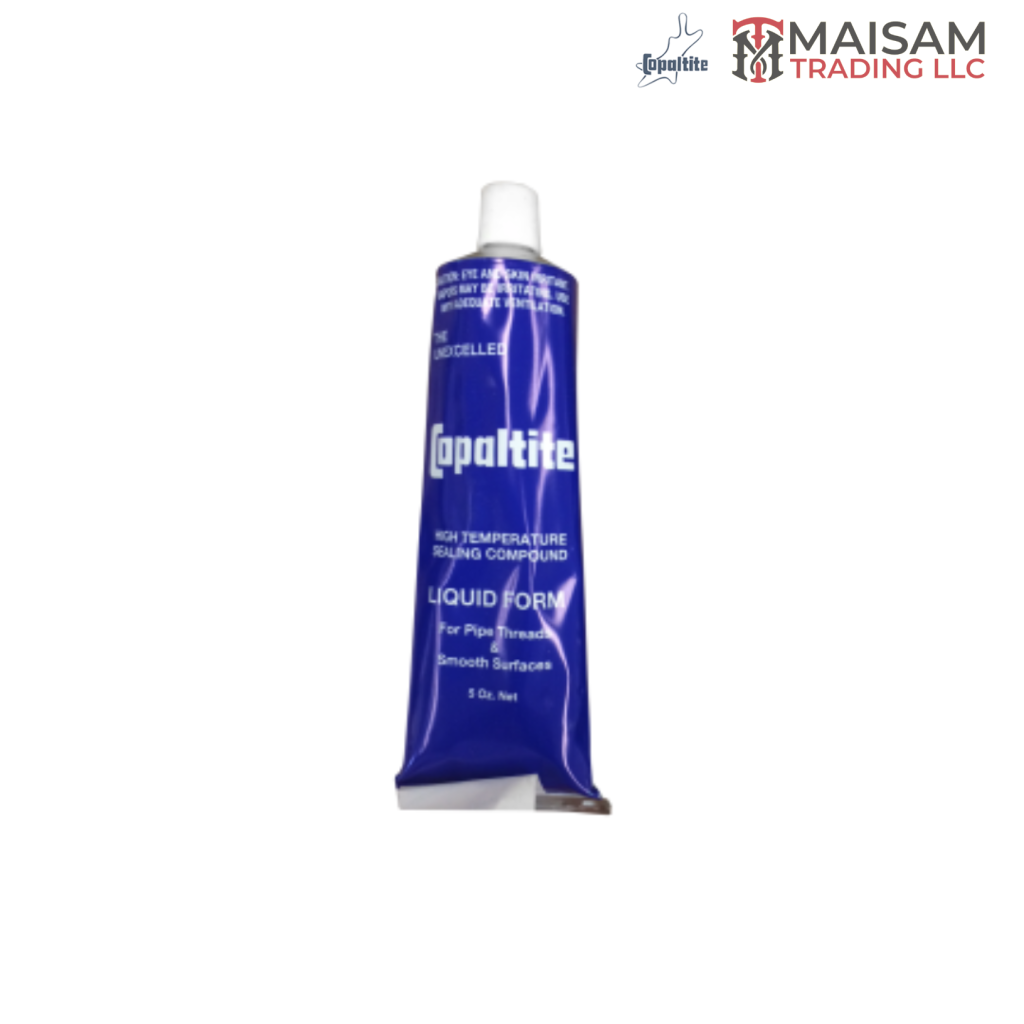
Copaltite Liquid Form is used on precision machined flange faces, nozzle threads, and channel cover joints where mating surfaces are in good condition. Its smooth paste spreads uniformly across the joint face and seats cleanly between mating surfaces.
Copaltite Cement Form is applied to warped shell flanges, scored tube sheet faces, and any large-diameter joint face where surface imperfections must be filled to achieve a leak-free seal.
Where Copaltite Is Applied on Heat Exchangers
- Shell-side and tube-side flange connections
- Channel cover and bonnet joint faces
- Tube sheet connections on fixed and floating head exchangers
- Inlet and outlet nozzle connections and threaded fittings
- Manhole cover seatings on large heat exchangers and pressure vessels
- Vent and drain valve threads on heat exchanger shells
Frequently Asked Questions
Copaltite is the most widely trusted sealant for heat exchanger flanges exposed to steam, hydrocarbons, acids, refrigerants, and brine. Its chemical resistance covers all common heat exchanger process media and its temperature range of -315°F to 1500°F covers every operating condition.
Yes. Copaltite Cement Form's thick, coarse-texture paste is specifically designed to fill gaps in warped, scored, and unfinished surfaces — making it ideal for large-diameter shell flanges that cannot achieve perfect surface contact across their full face.
Copaltite Liquid Form is normally used without gaskets on precision machined surfaces. It can also function as an excellent gasket dressing to improve the performance of existing gasket joints. Copaltite Cement Form acts as the gap-filling compound for rough or damaged surfaces.
Copaltite's anti-seize properties allow joints to be broken cleanly and reassembled after extended service — even at high temperatures and pressures. This is a critical maintenance advantage during planned turnarounds where heat exchanger bundles must be pulled and reseated.
Copaltitemena is the Stockiest for the Middle East. Email [email protected] or visit copaltitemena.com.
Contact
Availability & Support Copaltite sealants for Heat Exchanger applications are available across the UAE and all major GCC industrial, power, and marine supply networks through Copaltite MENA. Email: [email protected] | Website: copaltitemena.com